
A classic helicopter gets two exciting new looks!
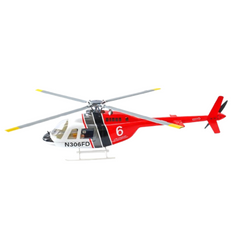
FLYWING expands its Bell 206 470-Class Scale RC Helicopter lineup with two new distinctive liveries: Santini Air and AirLife Denver.
Previously available in the classic Jet Ranger rescue livery, the FLYWING Bell 206 now offers two fresh styling options for scale RC helicopter enthusiasts and collectors.
For fans of the legendary TV series Airwolf, the Santini Air version brings a special touch of nostalgia, connecting the Bell 206 to the aviation world of Dominic Santini. Meanwhile, the AirLife Denver version introduces another distinctive aviation-inspired look for those who appreciate the timeless Bell 206 design.
But the updates go beyond appearance. Equipped with the ACE flight controller, BeiDou-assisted satellite positioning, intelligent flight assistance, and the upgraded RC02 transmitter, this 470-class scale RC helicopter combines classic aviation styling with modern flight technology.
Three distinctive styles. Two new looks. One iconic helicopter.
Two New Bell 206 Liveries Join the Lineup
The Bell 206 has long been recognized as one of the most versatile and recognizable light utility helicopters in aviation. FLYWING brings this familiar silhouette to the RC world, and the latest liveries give enthusiasts even more ways to enjoy this classic aircraft.
The original Jet Ranger rescue-inspired version remains part of the Bell 206 lineup. Now, Santini Air and AirLife Denver add two fresh alternatives.
Classic Jet Ranger Rescue Livery

The original Jet Ranger rescue livery captures the practical character of the Bell 206 as a utility and emergency aviation helicopter.
Its recognizable rescue-inspired styling has made it a popular choice for enthusiasts who appreciate traditional aviation themes and realistic scale helicopter models.
For collectors who already own this version, the two new liveries offer an opportunity to expand their Bell 206 collection with different visual identities.
New Santini Air Livery – A Special Connection to Airwolf
For fans of the legendary television series Airwolf, the name Santini Air should sound familiar.
In the series, Santini Air is the aviation company operated by Dominic Santini, the skilled pilot and close friend of Stringfellow Hawke. The company became an important part of the show's aviation identity and unforgettable helicopter adventures.
The new FLYWING Bell 206 Santini Air livery brings that nostalgic connection into the world of scale RC helicopters.
Already interested in the FLYWING Bell 222 Airwolf 470-Class? The Santini Air Bell 206 makes a natural companion for your collection.
One celebrates the iconic Airwolf helicopter, while the other represents the Santini Air connection behind the classic series.
For Airwolf fans and scale helicopter collectors, these two models make an especially interesting pairing.
New AirLife Denver Livery – A Fresh Aviation Look
 Looking for something different?
The new AirLife Denver livery adds another distinctive styling option to the FLYWING Bell 206 lineup.
Its alternative aviation-inspired appearance provides a fresh take on the classic Bell 206 silhouette, offering enthusiasts another choice beyond the traditional rescue styling and the Santini Air connection.
Whether you're expanding an existing collection or choosing your first FLYWING Bell 206, the AirLife Denver version brings its own personality to this 470-class scale helicopter.
Which look would you choose: Classic Jet Ranger, Santini Air, or AirLife Denver?
Advanced ACE Flight Controller with GPS & BeiDou Positioning
Beyond its new appearance, the FLYWING Bell 206 features an advanced ACE flight controller designed to make helicopter operation more intelligent and manageable.
Combining satellite positioning technology with barometric altitude assistance and multiple flight modes, the system provides different levels of flight assistance for different operating preferences.
Key flight assistance features include:
-
GPS stabilization and position holding
-
GPS/GLONASS satellite positioning with BeiDou assistance
-
One-button Return-to-Home
-
Low-battery Return-to-Home
-
Loss-of-control Return-to-Home
-
One-button reverse flight
-
Assisted circular and figure-eight flight paths
-
Multiple flight sensitivity settings
When satellite positioning is functioning normally, the specified hovering accuracy is approximately ±1.5 m horizontally and ±0.5 m vertically.
The combination of satellite positioning and attitude stabilization gives pilots more options when controlling the helicopter.
GPS-assisted functions depend on suitable satellite reception and environmental conditions. Always maintain visual contact and remain prepared to take manual control.
Multiple Flight Modes for Different Flying Experiences
One of the most interesting aspects of the FLYWING Bell 206 is its range of flight modes.
Instead of relying on a single stabilization setting, the ACE flight controller provides several options, allowing pilots to explore different levels of assistance and control.
GPS Stabilization Mode
GPS mode provides position and altitude assistance, helping the helicopter maintain a relatively fixed location when satellite positioning is operating normally.
In suitable open areas, pilots can command the helicopter to move in a desired direction and release the control stick to allow the system to assist with braking and position holding.
This makes GPS mode useful for pilots who want additional assistance with positioning during flight.
Freedom Mode
The new Freedom mode offers a more natural braking response compared with conventional GPS-assisted control.
When the control sticks are released, the helicopter continues moving briefly due to inertia before gradually slowing down and returning to a hovering position.
By using a gentler braking response, this mode helps reduce abrupt flight posture changes caused by excessive automatic braking.
ATT Mode
ATT mode uses high-precision gyroscopes, accelerometers, and a barometer to assist with attitude stabilization.
Unlike GPS mode, it does not automatically brake the helicopter to maintain a fixed position when the sticks are released.
Instead, the helicopter returns toward a level attitude while remaining subject to wind and inertia, meaning some drifting may occur.
6G Stabilization Mode
6G mode provides basic attitude stabilization without GPS position holding or altitude hold.
The pilot directly controls collective pitch through the sticks, while the flight controller provides basic attitude stabilization.
This mode requires more active pilot input and is intended for users familiar with collective-pitch RC helicopter operation.
3D Manual Mode
For experienced RC helicopter pilots, the system also supports 3D manual flight.
Pilots can explore more advanced flying after establishing GPS positioning and switch back to GPS assistance when needed, subject to the flight controller's operating conditions.
These different modes provide flexibility for pilots with different flying preferences and experience levels.
Intelligent Flight Assistance: Coordinated Turns & Automatic Flight Paths
The ACE system also introduces several intelligent flight assistance functions designed to simplify certain flying maneuvers.
Intelligent Coordinated Turning
Traditional RC helicopter flying requires pilots to coordinate cyclic and rudder inputs to perform smooth turns.
The ACE system incorporates an intelligent coordinated turning function. When forward and rudder inputs are applied, the flight controller assists with aileron adjustments to help produce smoother roll movements and more controlled turns.
This reduces some of the complexity of coordinating multiple control inputs and helps pilots achieve more consistent flight paths.
Automatic Circular & Figure-Eight Flight
The Bell 206 supports assisted circular and figure-eight flight paths.
The helicopter can follow preset horizontal flight paths, creating circular or figure-eight movements in the air.
Each circular flight path has a specified diameter of approximately 15 meters.
During assisted flight, pilots can adjust flight sensitivity settings to influence the movement speed.
Slow Takeoff & Landing
Slow takeoff and landing functions help reduce the helicopter's movement speed during these important stages.
This contributes to smoother transitions and a more controlled flying experience.
Upgraded RC02 Transmitter: Real-Time Flight Data & Direct Adjustments

The upgraded FLYWING RC02 transmitter is another major highlight of the Bell 206.
Rather than requiring a computer for routine parameter adjustments, the RC02 brings essential flight information and configuration options directly to the pilot.
With its 2.8-inch TFT color display and integrated voice announcement system, the transmitter provides a more informative and convenient control experience.
Key RC02 Features
-
12-channel transmitter capability
-
2.8-inch TFT color display
-
Real-time flight data feedback
-
Five additional data feedback screens
-
Voice announcements in five languages
-
Built-in flight log recording
-
Aircraft model memory
-
Direct flight parameter adjustments
-
Compass calibration support
Real-Time Flight Information
The additional display screens allow pilots to monitor important aircraft information, including:
-
Battery voltage
-
Satellite count
-
Compass interference level
-
Flight controller stability information
This makes it easier to understand the helicopter's status before and during flight.
Direct Parameter Adjustments Without a Computer
The RC02 allows users to adjust important helicopter parameters directly through the transmitter.
Supported adjustments include:
-
Flight sensitivity
-
Pitch settings
-
Swashplate leveling
-
Model parameter selection
-
Compass calibration
The transmitter also supports model memory, making it more convenient to manage different aircraft configurations.
Voice Announcements in Five Languages
The integrated voice announcement system provides operational and aircraft status information in five supported languages:
-
English
-
Chinese
-
Japanese
-
German
-
French
Combined with real-time data feedback and flight log recording, the RC02 offers a more integrated approach to RC helicopter control and monitoring.
The transmitter also allows customization of ACRO mode selections, including ATT, 6G, and Manual modes.
Thoughtful Mechanical Design: Quick-Release Rotor & Enclosed Tail Motor
The FLYWING Bell 206 combines its advanced electronics with a practical mechanical design.
Quick-Release Two-Blade Rotor
The quick-release two-blade rotor design makes blade installation and removal easier.
This provides added convenience when transporting, storing, and performing routine maintenance on the helicopter.
Fully Enclosed Tail Motor
The fully enclosed tail motor integrates the drive system into the helicopter's structure, creating a neat and streamlined appearance.
It also contributes to the overall scale-inspired design of the Bell 206.
High-Precision Flybarless Rotor Structure
The helicopter adopts a high-precision flybarless rotor structure inspired by FLYWING's larger 700-class design.
Compared with a traditional 450L DFC structure, the additional swing joint helps improve mechanical stability.
The main shaft and cross shaft also use 470L-class dimensions, providing a robust mechanical foundation.
Combined with its brushless power system, this design makes the Bell 206 an interesting option for enthusiasts who appreciate both scale appearance and mechanical engineering.
FLYWING Bell 206 470-Class RC Helicopter Specifications

| Specification | Details |
|---|---|
| Brand | FLYWING |
| Aircraft Type | Bell 206 |
| Class | 470-Class |
| Control Frequency | 2.4GHz |
| Helicopter Channels | 6CH |
| Flight Controller | ACE |
| Positioning System | GPS / GLONASS with BeiDou assistance |
| Flight Modes | GPS, Freedom, ATT, 6G, 3D Manual |
| Return-to-Home | One-Button, Low-Battery, Loss-of-Control |
| Main Motor | 2816 Brushless Motor |
| Tail Motor | 2008 Brushless Motor |
| ESC | 60A Dual Brushless ESC |
| Motor Gear | 13T |
| Main Drive Gear | 8T |
| Fuselage Length | 800 mm |
| Fuselage Height | 230 mm |
| Fuselage Width | 170 mm |
| Main Rotor Diameter | 805 mm |
| Main Rotor Blade Length | 360 mm per blade |
| Tail Rotor Diameter | 164 mm |
| Weight (Without Battery) | 790 g |
| Main Materials | Metal and Electronic Components |
| New Color Options | Santini Air / AirLife Denver |
| Previous Livery | Jet Ranger Rescue |
| Transmitter | RC02 |
| Recommended Age | 16+ |
What's Included in the Package?
The listed package configuration includes:
-
Pre-assembled helicopter airframe × 1
-
Handcrafted, painted one-piece fuselage × 1
-
Flight battery × 1
-
Digital charger × 1
-
RC02 transmitter × 1
Please check the selected product configuration before ordering. The PNP version does not include a battery.
Why Choose the FLYWING Bell 206 470-Class RC Helicopter?
The new FLYWING Bell 206 brings together three important elements: recognizable scale styling, advanced flight assistance, and an integrated transmitter experience.
Its expanded livery lineup offers something for different enthusiasts. The original Jet Ranger rescue version retains its classic aviation appeal, while the new Santini Air and AirLife Denver versions introduce fresh styling options.
For Airwolf fans, the Santini Air version adds an extra layer of nostalgia and makes an interesting companion to the FLYWING Bell 222 Airwolf 470-Class.
On the technical side, the ACE flight controller combines satellite positioning, multiple flight modes, intelligent flight assistance, and automatic return functions. The upgraded RC02 transmitter adds real-time flight information, voice announcements, flight logging, and direct parameter adjustments without requiring a computer.
Whether you're a scale helicopter collector, an aviation enthusiast, or an experienced RC pilot looking for a new 470-class model, the FLYWING Bell 206 deserves a closer look.
Three Styles. One Iconic Helicopter. Choose Your Favorite.
Discover the new FLYWING Bell 206 470-Class RC Helicopter at Razordon and explore the Santini Air and AirLife Denver versions.
Important RC Helicopter Flight Safety Notice
RC helicopters are advanced hobby products and require proper assembly, inspection, and operating knowledge.
Always fly in a suitable open area away from crowds, buildings, vehicles, and obstacles. Improper assembly, damaged components, electronic failures, or unfamiliarity with the controls can result in loss of control and potential injury.
Before every flight, carefully inspect the main rotor clamp cross-shaft, tail rotor clamp, ball joints, and fuselage screws. Ensure all required fasteners are properly secured according to the manufacturer's instructions, including the use of thread-locking adhesive where specified.
GPS and automatic return functions are flight assistance features, not guarantees against accidents or loss of control. Maintain visual contact with the helicopter throughout the flight and always be prepared to take manual control.