
Ist der Razordon Wolfbush RC-Gleitschirm wirklich die richtige Wahl für Anfänger?
Basierend auf Praxistests lautet die kurze Antwort ja – aber es ist wichtig zu verstehen, warum.
Um eine klare und ehrliche Einschätzung zu erhalten, luden wir Nace, einen Piloten mit fast 30 Jahren RC-Gleitschirmflugerfahrung, ein, dieses Modell unter realen Flugbedingungen zu testen. Nace hat im Laufe der Jahre Hunderte von Modellen getestet, wobei er sich stets auf das reale Flugverhalten und nicht auf die Spezifikationen auf dem Papier konzentrierte.
In diesem Bericht fassen wir zusammen, was er bei mehreren Testflügen beobachtete, einschließlich des Startverhaltens, der Flugstabilität, der Akkuleistung und der Anfängersicherheit. Das Ziel ist einfach: neuen Piloten zu helfen, zu entscheiden, ob dieser RC-Gleitschirm eine intelligente und risikoarme Möglichkeit ist, in das Hobby einzusteigen.
Sehen Sie Naces vollständigen Flugtest und Bericht unten:
Ist dieser RC-Gleitschirm wirklich anfängerfreundlich?
Ja. Basierend auf den Tests ist dieser RC-Gleitschirm tatsächlich anfängerfreundlich. Er verfügt über ein selbststabilisierendes Design, einen leicht zu startenden Einskin-Flügel und einen sehr robusten Rahmen. Der Einskin-Flügel lässt sich leicht starten, auch für Neueinsteiger.
Naces 10-jähriger Sohn beherrschte die Starts schnell. Das Modell bleibt stabil und erholt sich schnell selbst. Wenn sich das Modell außer Kontrolle anfühlt, kann es durch Ausschalten des Gashebels und Zentrieren der Steuerknüppel von selbst zur Ruhe kommen.
Diese Fehlertoleranz schafft Vertrauen. Neue Piloten vermeiden Frustration und genießen längere Sessions.
Erster Eindruck und Lieferumfang
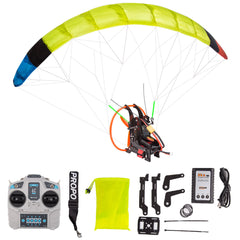
Der Wolfbush wird als Ready-to-Fly (RTF)-Kit geliefert. Das ist perfekt für Anfänger, die sich die komplexe Montage sparen und direkt aufs Feld wollen.
- Fertig montierter Gleitschirm
- 2,4-GHz-Sender
- Ein spezielles Akkuladegerät
- Ersatzpropeller
- Ersatzteile

Verarbeitungsqualität & Liebe zum Detail
Bei seiner Inspektion wies Nace auf wichtige Details hin. Der Flügel verwendet echten Gleitschirm-Ripstop-Nylon, keinen billigen Kunststoff. Alle Komponenten sind präzise lasergeschnitten und genäht, ein Zeichen für hochwertige Verarbeitung, die bei Einsteigermodellen oft fehlt. „Für einen anfängerfreundlichen Trainer ist die Konstruktion solide. Es fühlt sich an wie echte Flugausrüstung“, schloss er.
Weitere wichtige Details:
- Spannweite: 128 cm
- Robuste Leinen: Das Leinenset ist unglaublich stabil und reißt bei harten Landungen nicht so leicht.
- Zuverlässige Elektronik: Ein bürstenloser Motor und Metallgetriebeservos sorgen für konstantes Drehmoment und Langlebigkeit.

Start- und Flugeigenschaften
Der Start ist oft der schwierigste Teil für neue RC-Gleitschirm-Piloten. Hier zeigte das Modell eine besonders gute Leistung.
Wie einfach ist es, abzuheben?
Das Einskin-Flügeldesign macht den Start einfach. Bei den Tests waren die Starts auch bei leichtem Wind konstant.
Naces Schritt-für-Schritt-Startanleitung:
- Vorbereitung: Den Flügel in den Wind ziehen, damit er sich aufbläht und aufsteigt.
- Der Drehpunkt: Für einen noch einfacheren Start das Modell leicht um sich selbst drehen, um Spannung zu erzeugen.
- Der Schub: Sobald der Flügel direkt über dem Kopf ist, dem Pilotenrahmen einen sanften Vorwärtsschub geben.
Er betonte jedoch eine nicht verhandelbare goldene Regel für die Sicherheit: „Schalten Sie den Motor IMMER ERST EIN, nachdem Sie das Modell losgelassen haben. Niemals, während Sie es halten. Dies verhindert Propellerschläge – das größte Startrisiko für Anfänger.“
Ein zu frühes Starten des Motors erhöht das Propellerrisiko. Eine zu hohe Startgeschwindigkeit kann auch zu Fehlstarts führen. Ausgewogene Eingaben sind der Schlüssel.
Flugverhalten – stabil und dennoch reaktionsschnell
In der Luft erwies sich der Wolfbush als von Natur aus stabil und vorhersehbar, perfekt zum Erlernen grundlegender Manöver. Dennoch ist er nicht langweilig. „Er ist leicht übermotorisiert“, bemerkte er, „so dass er enthusiastisch auf den Gashebel reagiert, was Steigflüge und einfache Kunstflugfiguren spaßig macht.“
Nace teilte ein kritisches, universell anwendbares Wiederherstellungsverfahren für jeden neuen Piloten mit, der sich überfordert fühlt:
- Gas reduzieren: Sofort den Gashebel auf Null stellen.
- Hände weg: Beide Steuerknüppel in die Mittelposition zurückkehren lassen.
- Warten: 2-3 Sekunden warten, bis die natürliche Stabilität des Gleitschirms den Flügel nivelliert hat.
- Kontrolle wieder aufnehmen: Sanft wieder die Kontrolle übernehmen.

Der Schlüssel zum unterschiedlichen Fluggefühl: die Akkuauswahl
Eine von Naces wertvollsten Entdeckungen war, wie die Akkuauswahl den Flug des Wolfbush RC-Gleitschirms verändert. Er testete systematisch drei Optionen:
| Akku | Geeignet für Piloten mit etwas Erfahrung | Flugcharakteristik (gemessen & geflogen von Nace) | Am besten für |
| 2S LiPo | 25-30 | Sanft, langsam und äußerst fehlerverzeihend. Sanfte Gasannahme. | Beste Option für Anfänger und ruhige Bedingungen |
| Standard 3S 1500mAh | 40-45 | Energetisch und sportlich. Starke Steigleistung für dynamisches Fliegen. | Geeignet für Piloten mit etwas Erfahrung |
| 3S 2200mAh | Höher | Schwerer und schneller. Ermöglicht bis zu 30 % längere Flugzeit. | Windige Bedingungen, erfahrene Anfänger, die mehr Geschwindigkeit und Ausdauer wünschen. |
Diese Flexibilität macht das Wolfbush Mini RC Paraglider Modell zu einem skalierbaren Trainingsflugzeug, das mit Ihrem Können mitwächst.
Was sollten Anfänger vor ihren ersten Flügen wissen?
Neben dem Handbuch gab Nace diese praxiserprobten Tipps:
- Antennensicherheit: Verwenden Sie ein kleines Stück Klebeband, um die Empfängerantennen am Pilotenrahmen zu befestigen. Dies verhindert, dass sie jemals den Propeller berühren.
- Fliegen Sie auf einem weitläufigen Feld: Wählen Sie einen Bereich ohne Bäume und Hindernisse. „Früher oder später wird es zu einem Absturz kommen. Geben Sie sich Raum“, rät er.
- Landungen auf dem Boden sind die häufigste Ursache für Schäden. Lernen Sie, das Modell so schnell wie möglich in Ihren Händen zu landen (bei ausgeschaltetem Motor!).
- Die 1-cm-Steuerungsanpassung: Wenn Sie nach einigen Flügen ein knackigeres Handling wünschen, kürzen Sie die hinteren Bremsleinen um ca. 1 cm. Nace tat dies und berichtete von einem „riesigen Unterschied“ in der Steuerungsreaktion.

Was sind die Nachteile oder Einschränkungen?
Kein Modell ist perfekt, und Nace hob einige Einschränkungen hervor, die Anfänger kennen sollten.
- Kein Akrobatikflugzeug: Es ist ein hervorragender stabiler Trainer, kein Hochleistungs-Wettkampfgleitschirm.
- Servorisiken: Harte Stürze können immer noch das Servogetriebe beschädigen.
- Leicht nach rechts: Beim Steigflug zieht das Motordrehmoment das Modell leicht nach rechts. Dies erfordert bei Linkskurven etwas mehr Eingabe.
Endgültiges Urteil
Basierend auf Praxistests eines Piloten mit fast 30 Jahren Erfahrung im RC-Gleitschirmfliegen lautet die Antwort ja. Dieses Modell zeichnet sich durch einfache Starts, ruhiges Flugverhalten und eine fehlerverzeihende Natur bei Fehlern aus. Diese Eigenschaften sind viel wichtiger als Geschwindigkeit oder erweiterte Funktionen, wenn Sie gerade erst anfangen.
Gleichzeitig fühlt es sich nicht wie ein „nur für Anfänger“-Modell an. Mit zunehmendem Können ermöglichen verschiedene Akku-Setups und kleine Tuning-Anpassungen dem Gleitschirm, mit dem Piloten zu wachsen.
Wenn Sie das RC-Gleitschirmfliegen zum ersten Mal ausprobieren und ein Setup wünschen, das das Risiko mindert und gleichzeitig das Erlebnis spaßig hält, ist dieser RC-Gleitschirm eine Überlegung wert.
Weitere Informationen zum Wolfbush RC Paraglider und den aktuellen Rabatt erhalten Sie direkt bei Razordon.